
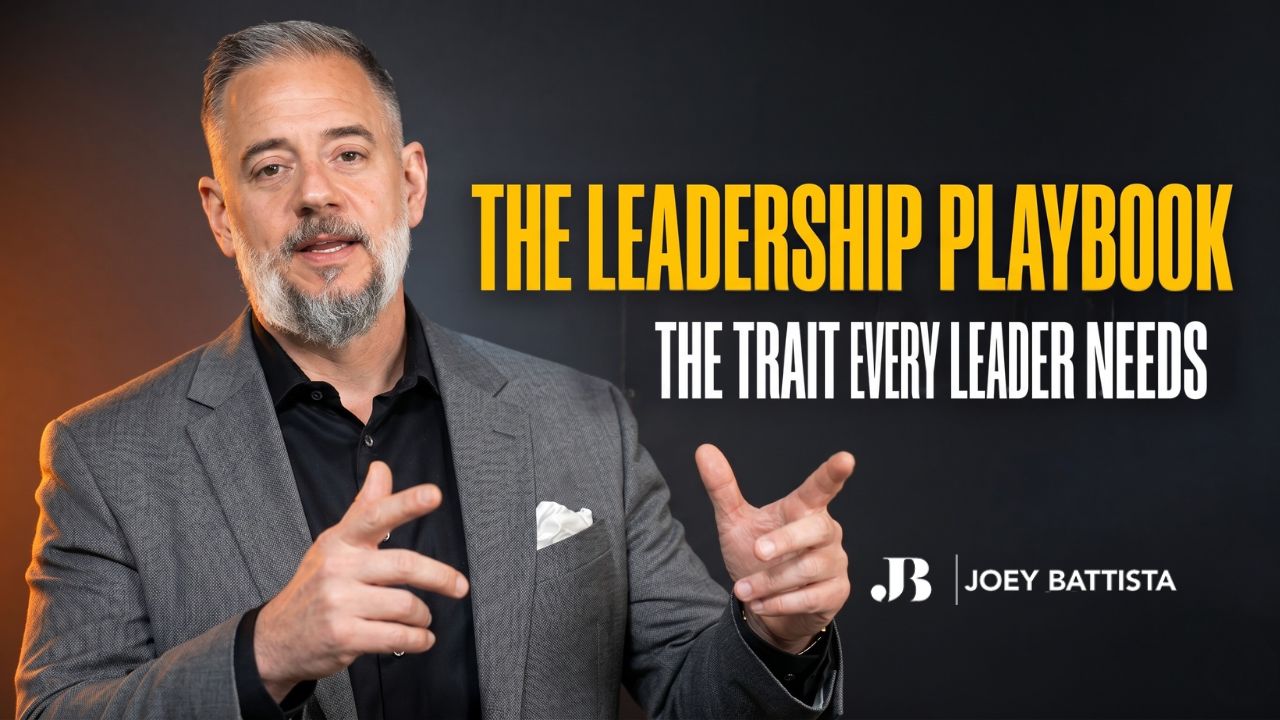
The Business Leadership Framework for Scaling Teams
I want to be very clear about something. Businesses do not grow because of better tactics. They grow because of better leadership. I have seen this play out over decades, across industries, and through every stage of business growth. When leadership is strong, the business expands. When leadership is weak, everything breaks.
If you want to understand business leadership, you have to stop thinking about titles and start thinking about behavior. Leadership development is not about motivation or hype. It is about building people, setting standards, and creating a repeatable business framework that works without you.
What I am sharing here is how I think about leadership inside my own companies. It is also how I coach founders who want to scale, exit, or step out of the day to day operations.
People Are the Real Growth Engine in Every Business
The number one ingredient in business is people. Not just people, but great people. That is where most companies get stuck.
Great people are not born. They are built. They are built through leadership, coaching, and clear expectations. If you are struggling with performance, turnover, or growth, look at your leadership first.
As a leader, you must lead by example. You cannot ask your team to do things you are unwilling to do yourself. If you want your team to take action, you must take action first. If you want accountability, you must model accountability.
I see owners complain about their team all the time. They say people do not follow through. They say people lack discipline. Meanwhile, they are not doing the very things they are asking for. That disconnect destroys trust and momentum.
Business leadership starts with you.
Great Leaders Are Never Misunderstood
One of the most important lessons I ever learned came from a mentor who had built companies for over sixty years. He told me something simple that changed how I lead.
Great leaders are never misunderstood.
That does not mean people always agree with you. It means they clearly understand you. Most leaders assume their message landed correctly. In reality, it rarely does.
If you explain something to ten people, you will get ten different interpretations. That is not a people problem. That is a leadership problem.
Here is the fix. At the end of every important conversation, ask one question.
What did you hear?
When people repeat back what they heard, you uncover gaps immediately. You can clarify expectations. You can correct assumptions. Over time, this habit eliminates confusion and increases execution.
If you want to optimize your human capital, this is non-negotiable.
Tough Conversations Are a Leadership Requirement
Many leaders lose great people because they avoid tough conversations. Others lose average people because they wait too long to address issues.
Leadership development requires courage. You must be willing to have uncomfortable conversations. Avoiding them does not protect culture. It weakens it.
Tough conversations are not about attacking people. They are about clarity, standards, and growth. When done correctly, they build respect.
If you want to coach people, you must give feedback. Feedback is the only way people improve.
KPIs Must Connect to the Money
Let us talk about KPIs, because this is where many businesses lose focus.
A KPI is a key performance indicator. It is simply what matters most. Every KPI must connect to a financial outcome. If it does not, it is a distraction.
Every business has a goal. Growth. Profit. Scale. Exit. Whatever your goal is, your KPIs must support it.
Too many companies track too many numbers. Fifteen KPIs dilute focus. They overwhelm teams and reduce impact.
Choose fewer KPIs. Choose better ones. Keep the main thing the main thing.
This is a critical part of any strong business framework.
Leadership Is About How People Think
When I review numbers with leaders, I am not just looking at results. I am looking at how they think.
I want to see reasoning. I want to see patterns. I want to see logic. If someone cannot think clearly, they cannot solve problems. If they cannot solve problems, they cannot lead.
Leadership development is about teaching people how to make good decisions. Decisions are the real assets of a company. Over time, good decisions create value. Bad decisions destroy it.
If you want to scale, you must teach your team how to think, not just what to do.
Deleveraging Yourself from the Business
A business goes through stages, just like a child. Early on, you do everything. Later, you must stop doing everything.
If you do not learn how to step out of the business, growth stops. You become the bottleneck.
Deleveraging yourself from the business is how value is created. It is also how exits happen. If the business only works when you are there, you do not own a business. You own a job.
This is where leadership matters most.
The Permission to Play Leadership Framework
One of the most important tools I use in leadership is what I call permission to play. This framework evaluates character, not skill.
I look at five traits. Honesty. Energy. Accountability. Respect. Trustworthiness.
This is what I call the heart scale.
You can train skills. You cannot train character. If someone lacks heart, they will eventually fail you and the business.
I learned this the hard way. When you invest years into developing someone without character, you trap yourself. You cannot promote them. You cannot replace them. You cannot exit them.
Character issues always surface. Always.
Why Character Beats Talent Long Term
Many businesses tolerate bad behavior because the person produces revenue. That decision always comes at a cost.
Short-term gains create long-term problems. When it is time to scale or exit, those problems explode.
I would rather build slower with the right people than grow fast with the wrong ones. Leadership is a long game.
If someone has heart, there is no limit to how much you can invest in them. If they do not, no amount of training will save them.
The Rule of Three and Talent Duplication
Scaling people requires a system. That is where the rule of three comes in.
First, identify the top performer in a role. Second, break down exactly what they do. Third, have them train three others.
Start by listing every task in the role. Then decide what can be automated, delegated, or eliminated.
Next, identify the high value activities that drive outcomes. These are the hardest skills to teach and the most important.
When top performers train others, two things happen. They feel recognized. And the business gains leverage.
Leadership becomes a revenue driver instead of an expense.
Leadership Is the Path to Value Creation
Everything I teach comes back to one question. How do we create the most value?
Value is created when the business runs without you. Value is created when leaders make good decisions consistently. Value is created when systems replace personalities.
That is the difference between an operator and an owner.
Most people become great operators. Very few become value creators.
Final Thoughts on Business Leadership
If you want to grow, scale, or exit your business, leadership development must become your priority.
Build people. Build systems. Build decision-making frameworks.
That is the business framework that works.
If you want help developing leaders, stepping out of the business, or creating real enterprise value, I can help.
You can connect with me for coaching or bring me in to speak to your team.
Call 571-576-6194 or schedule a one-on-one appointment at https://battistaacademy.com/1-on-1.


