
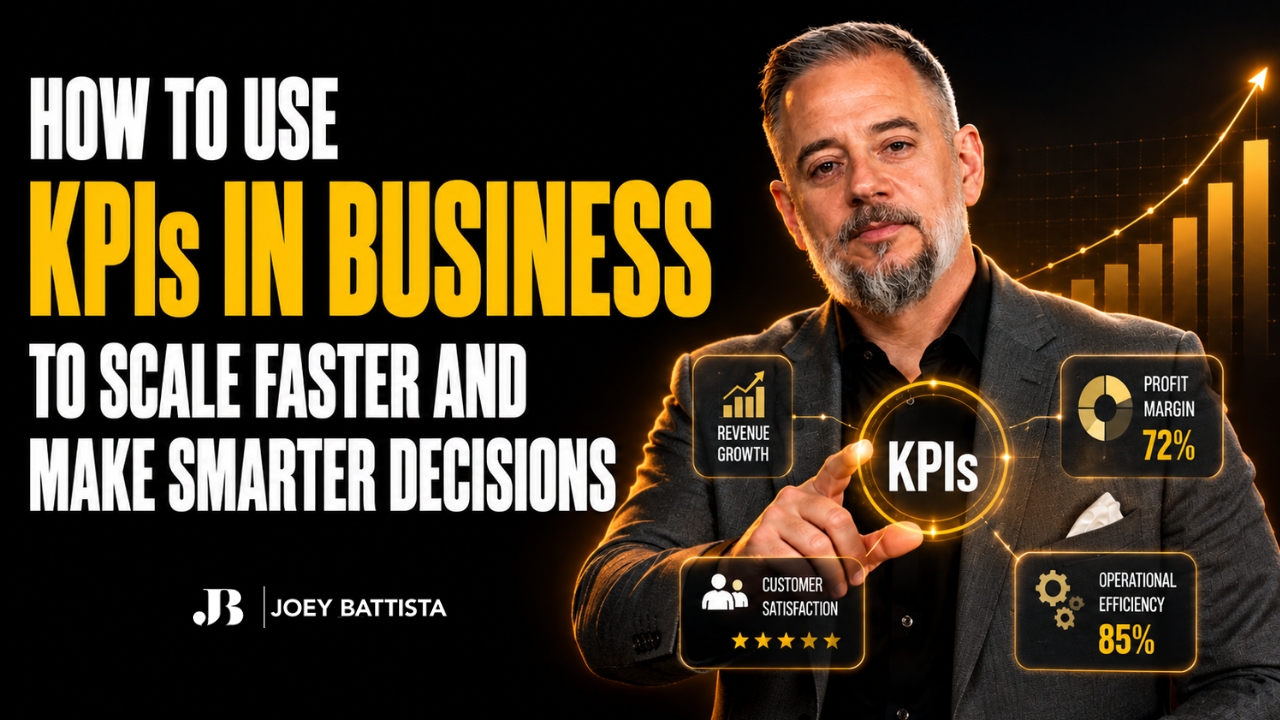
How to Use KPIs in Business to Improve Growth and Leadership
Every entrepreneur wants to grow.
You want more revenue. You want a stronger team. You want better profits. Most of all, you want a business that keeps moving forward without feeling like you're putting out fires every day.
The problem is that many business owners chase growth without knowing what is really happening inside their company.
They look at sales at the end of the month. They celebrate when revenue goes up. They panic when it goes down. However, they never stop to ask what caused those results in the first place.
That is exactly why I believe every business owner needs to understand how to use KPIs in business.
KPIs are not just numbers on a spreadsheet. They are leadership tools. They help you make better decisions. They show your team what matters. They allow you to fix problems before those problems become expensive.
I have worked with entrepreneurs from many different industries. Some own home service companies. Others own automotive businesses, recruiting firms, salons, retail businesses, and professional service companies. No matter the industry, I continue to see the same challenge.
Most businesses do not have a data problem.
They have a visibility problem.
If you cannot clearly see what is happening inside your business, you cannot improve it. You cannot coach your people properly. You cannot hold anyone accountable. Most importantly, you cannot scale consistently.
That is why learning how to track KPIs effectively becomes one of the highest return activities any business owner can invest in.
Stop Guessing and Start Leading
As I look toward every new year, I always spend time reflecting.
What goals did I accomplish?
Which goals did I miss?
Which goals should have been bigger?
Which goals should never have been on my list?
That reflection is important because successful leaders do not wait until December to figure out whether they are winning.
They stay ahead of the business.
Too many entrepreneurs spend the entire year reacting. They solve today's problems without preparing for tomorrow's opportunities.
That creates stress.
It creates inconsistency.
Eventually, it creates burnout.
Instead, I encourage you to build a system that tells you what is happening before you reach the end of the month or quarter.
That is where KPI implementation changes everything.
Your Business Needs Direction Not More Data
Many business owners already collect information.
They have reports.
They have software.
They have dashboards.
Yet they still struggle to grow.
The reason is simple.
Information alone does not create success.
You must turn data into direction.
Every KPI should answer an important business question.
Are we growing?
Are we becoming more profitable?
Are we serving customers better?
Is our marketing improving?
Is our sales process converting?
Is our team performing consistently?
If your reports cannot answer those questions, they are not helping your business.
Your numbers should guide your next decision.
That is the real purpose of KPI implementation.
How to Use KPIs in Business Without Making Them Complicated
Many entrepreneurs think KPI systems need to be complicated.
They do not.
In fact, simple systems often outperform complex ones.
The goal is not to measure everything.
The goal is to measure what actually drives growth.
When I coach business owners, I encourage them to focus on a small group of meaningful metrics.
Those metrics should help answer three major questions.
First, is revenue growing?
Second, is profitability improving?
Third, is the company financially healthy enough to continue growing?
Everything else supports those answers.
When your team understands those numbers, they begin making better decisions every day.
That is where leadership starts multiplying throughout the organization.
Why Weekly KPI Meetings Matter
One mistake I see repeatedly is that leaders review numbers only when something goes wrong.
That approach keeps you behind.
Instead, create a weekly rhythm.
Every week your leadership team should meet.
Celebrate the wins.
Review the scorecard.
Discuss the trends.
Identify obstacles.
Assign solutions.
Then move forward together.
These meetings should never become blame sessions.
They should become coaching sessions.
When people understand why a number matters, they become invested in improving it.
That changes everything.
Your meetings stop becoming complaints about performance.
They become conversations about improvement.
Data Removes Emotion From Leadership
One of the biggest breakthroughs I experienced in business happened when I stopped making emotional decisions.
Every entrepreneur has days where it feels like nothing is working.
You may think marketing failed.
You may think sales are weak.
You may think your employees are not trying.
However, feelings rarely tell the full story.
Numbers do.
When you rely on data, you remove unnecessary emotion.
Instead of asking who made the mistake, you begin asking better questions.
Did lead quality decline?
Did conversion rates change?
Did customer demand shift?
Did follow up slow down?
Now you are solving the real problem instead of blaming people.
That creates healthier teams.
It also creates stronger businesses.
Great Operators Stay Ahead of Problems
One reason I like using a 13 week trend board is because it shows patterns before those patterns become expensive.
A single bad week does not always mean there is a crisis.
However, several weeks moving in the wrong direction usually reveal something that needs attention.
That visibility gives leaders time to act.
Instead of reacting after profits disappear, you adjust while the business is still healthy.
This is one of the biggest advantages of learning how to track KPIs effectively.
The numbers become early warning signals.
They allow you to stay proactive instead of reactive.
AI Will Never Replace Strong Leadership
Today everyone is talking about artificial intelligence.
I use AI.
I believe it is an incredible tool.
However, AI will never replace business leadership.
Eventually every company will have access to similar technology.
That means your competitive advantage cannot depend on software alone.
It must come from leadership.
It must come from coaching.
It must come from communication.
It must come from accountability.
Technology may improve efficiency, but great operators still build great companies.
That never changes.
Your Team Wants More Clarity Than Motivation
Many leaders believe their employees simply need more motivation.
I disagree.
Most people want clarity.
They want to know what success looks like.
They want to know what matters.
They want to understand how their work contributes to the company's mission.
That is exactly what KPIs provide.
Instead of vague expectations, your team has measurable goals.
Instead of guessing, they know exactly where they stand.
Instead of feeling disconnected, they become engaged.
Engagement is one of the most overlooked drivers of business growth.
People perform better when they believe their work matters.
When they can see progress, they naturally become more accountable.
That is why KPI implementation is about much more than measuring numbers.
It is about building a culture where people understand how to win.
Turn KPI Reviews Into Better Business Decisions
Many businesses collect data, but they never use it to improve performance.
That is where the gap exists.
A scorecard sitting in a folder does not grow a business. A dashboard on a screen does not improve profits. Results come from reviewing those numbers consistently and acting on what they reveal.
I encourage business owners to make KPI reviews part of their operating rhythm.
Look at the numbers every week.
Ask what improved.
Ask what declined.
Ask why it happened.
Then decide what action the team should take before the next meeting.
That simple habit creates momentum.
Small improvements made every week become major improvements over a year.
That is one of the biggest reasons I teach how to use KPIs in business. The numbers only matter when they influence better decisions.
The 13 Week Trend Board Gives You a Clear Picture
One of my favorite tools is a 13 week trend board.
Most leaders overreact to one bad week.
Sales might dip because of a holiday.
Lead volume might slow because of the weather.
Production could fall because someone took vacation.
Those situations happen.
The real value comes from watching the trend instead of reacting to a single number.
When you review thirteen weeks together, patterns become obvious.
You can quickly identify whether sales are improving or declining.
You can see if your marketing campaigns continue producing qualified leads.
You can determine whether customer retention is improving.
You can recognize operational issues before they become expensive problems.
That level of visibility allows you to lead with confidence instead of assumptions.
Accountability Begins With Clear Expectations
Many leaders believe accountability means confronting employees when they miss expectations.
I see it differently.
Real accountability begins long before a difficult conversation.
People need to understand what success looks like.
They need measurable goals.
They need regular coaching.
Most importantly, they need feedback based on facts instead of opinions.
That is exactly what KPIs provide.
When expectations are clear, coaching becomes easier.
Instead of saying someone is not performing well, you can point to the metrics together.
Then the conversation becomes collaborative.
You are no longer arguing about opinions.
You are solving a business problem together.
That approach builds trust while improving performance.
Measure What Actually Drives Growth
Every business tracks different numbers.
However, not every number deserves your attention.
I encourage leaders to focus on metrics that directly influence growth.
For many companies, that includes:
Lead generation
Lead conversion rate
Sales revenue
Gross profit
Net profit
Customer retention
Average transaction value
Employee productivity
Customer satisfaction
Cash flow
These measurements help you understand the health of your business.
They also help every department understand how their work contributes to the company's success.
When everyone knows the score, everyone can improve the score.
That is the foundation of successful KPI implementation.
Marketing and Sales Become Easier to Improve
One lesson I continue teaching business owners is this.
You cannot improve what you do not measure.
Suppose your marketing generates plenty of leads.
That sounds great.
However, what happens if those leads never become customers?
The marketing may not be the problem.
The sales process may need improvement.
Now imagine your sales team closes at a high rate.
Yet revenue continues declining.
The issue may be lead quality instead.
Without KPIs, you would probably guess.
With KPIs, you know where to focus.
That allows you to invest your time, money, and energy where it creates the biggest return.
Leadership Is Built Through Consistency
People often ask me what separates businesses that continue growing from those that struggle.
It is rarely talent.
It is rarely luck.
More often, it comes down to consistency.
Strong leaders consistently communicate expectations.
They consistently review performance.
They consistently coach their people.
They consistently solve problems before they become crises.
KPIs support every one of those habits.
They create structure.
They create discipline.
They create clarity.
Over time, those qualities become part of the company's culture.
Culture does not happen by accident.
It is built through consistent leadership.
Growth Happens When Everyone Understands the Mission
One of the biggest mistakes leaders make is believing employees only care about a paycheck.
Most people want to contribute.
They want to know they are making progress.
They want to be part of something meaningful.
When your team understands the company's goals and can see the numbers moving in the right direction, engagement improves.
People become more invested.
Departments begin working together instead of operating in silos.
Communication improves.
Decisions become faster.
Execution becomes stronger.
That is how businesses create sustainable growth.
Build a Business That Runs on Systems Instead of Guesswork
If you want predictable growth, you need predictable systems.
That starts with understanding how to use KPIs in business.
KPIs help you remove emotion from leadership.
They improve communication across your organization.
They create accountability without creating fear.
They help you identify problems while there is still time to fix them.
Most importantly, they give you confidence because your decisions are supported by facts.
Business growth should never depend on hope.
It should depend on visibility, leadership, and consistent execution.
When you learn how to track KPIs effectively, you stop reacting to yesterday's problems and start building tomorrow's opportunities.
That shift changes everything.
Build a Business That Scales With Confidence
If you are serious about growing your business, improving leadership, and creating a team that performs at a higher level, I would love to help.
At Battista Academy, I work with business owners who are ready to implement proven systems, strengthen accountability, and build companies that produce predictable results. Whether you need guidance on KPI implementation, leadership development, or operational excellence, the right coaching can help you move forward faster.
If you are ready to take the next step, call 571-576-6194 or schedule your one on one appointment online with my team. I look forward to helping you build a stronger business and become the leader your company needs.


