
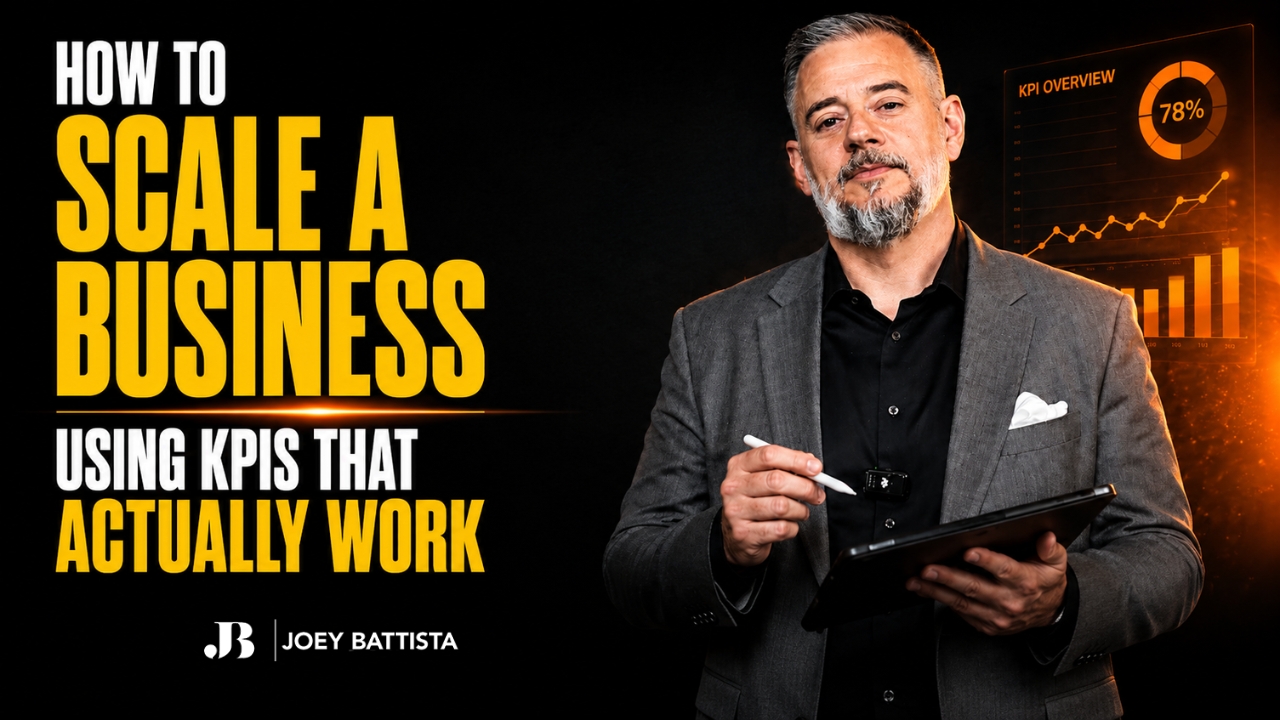
How to Scale a Business Using KPIs and a Leadership Framework
Growing a business is exciting. However, it also exposes every weakness inside your company. The systems that worked with five employees often fail with twenty. The communication that felt effortless suddenly becomes confusing. Accountability starts slipping, and decisions become slower.
Many business owners respond by chasing better reports or adding more KPIs. They believe more data will solve the problem.
I disagree.
Over the years, I have learned that scaling a business has very little to do with collecting numbers. Instead, it has everything to do with what leaders do with those numbers.
That is where most companies get stuck.
They measure performance every week. Yet nothing changes. Meetings become routine. Reports get ignored. Employees stop paying attention because they know nobody will coach them or hold them accountable.
A KPI is only useful when it leads to better leadership.
That is why I teach business owners to build a leadership framework around their numbers instead of simply tracking them.
If you want to know how to scale a business using KPIs, you first have to understand that KPIs are only tools. Leadership is what turns those tools into growth.
Why Most Companies Never Grow Beyond Their Current Level
One of the biggest mistakes I see is assuming growth happens naturally.
It doesn't.
As your company grows, complexity grows with it.
You have more employees, more customers, more departments, and more opportunities for mistakes.
Without structure, leaders spend their entire week reacting instead of leading.
Eventually, they become the bottleneck.
Every decision flows through them.
Every problem lands on their desk.
Every employee waits for direction.
That isn't leadership.
That is survival.
The companies that continue growing understand something different.
They create systems that help everyone make better decisions without waiting for the owner.
That requires visibility.
It also requires accountability.
Most importantly, it requires consistency.
Your Numbers Should Start Conversations
Many companies build dashboards because they think dashboards are the answer.
They are not.
A dashboard only tells you what happened.
It doesn't explain why it happened.
More importantly, it doesn't tell your team what needs to improve next.
That is why I use a trend board.
A trend board is much more than a collection of metrics.
It becomes the foundation of every leadership conversation inside the company.
Every week, leaders review performance together.
They look for patterns instead of isolated events.
They ask better questions.
They identify obstacles before those obstacles become major problems.
Most importantly, they coach their people using real evidence instead of opinions.
That changes everything.
Instead of blaming employees, leaders start developing them.
Instead of guessing, they start making informed decisions.
Instead of reacting, they begin leading proactively.
The Trend Board Creates Accountability Without Micromanagement
Business owners often worry that tracking KPIs will make employees feel controlled.
In reality, the opposite usually happens.
People appreciate clarity.
They want to know what success looks like.
They want measurable goals.
They also want consistent feedback.
A trend board provides all three.
Everyone understands the expectations.
Everyone knows where improvement is needed.
Everyone can celebrate progress together.
That removes emotion from difficult conversations.
Instead of saying someone is underperforming, you simply review the trend.
The numbers tell the story.
Then leadership begins.
You coach.
You teach.
You remove obstacles.
You provide resources.
That creates trust instead of frustration.
Eventually, accountability becomes part of the culture.
Employees stop working because someone is watching.
Instead, they work because they understand how their performance contributes to the company's success.
That is a major shift.
It also becomes one of the biggest reasons companies successfully scale.
Weekly Leadership Meetings Drive Real Growth
Many leadership meetings accomplish very little.
People gather in a room.
They review reports.
Everyone agrees to improve.
Then they return to work.
The same problems appear again next week.
Nothing changes.
A productive leadership meeting looks very different.
Every meeting should create action.
Every KPI should lead to coaching.
Every discussion should produce ownership.
That is exactly how I structure weekly meetings.
We review the trend board.
We identify wins.
We discuss challenges.
We ask why results changed.
We assign clear action items.
Then we follow up the following week.
That consistency creates momentum.
Over time, leaders become stronger coaches.
Departments become more aligned.
Communication improves.
Execution becomes faster.
Those improvements compound every single week.
Eventually, the business begins operating with far less chaos.
And that is exactly what happens when leadership becomes systematic instead of reactive.
Great Leaders Coach Instead of Judge
One lesson changed the way I lead businesses.
Your job is not to judge performance.
Your job is to improve performance.
There is a big difference.
Judging focuses on the past.
Coaching focuses on the future.
When someone misses a KPI, I don't immediately ask what they did wrong.
I ask what prevented success.
I ask what support they need.
I ask what skills they need to develop.
Those conversations create growth.
Eventually, employees become better problem solvers.
Managers become stronger leaders.
Departments become more independent.
That allows owners to stop solving every issue personally.
It also creates the leadership depth necessary for long term growth.
Without coaching, KPIs become punishment.
With coaching, KPIs become development tools.
That distinction changes an entire company culture.
How to Scale a Business Using KPIs That Actually Matter
Many business owners ask me the same question.
How do you scale a business using KPIs?
The answer surprises them.
You do not start with the KPI.
You start with the leader.
A KPI without leadership is just another number on a spreadsheet. However, a KPI combined with coaching creates improvement every single week.
That is why your leadership team must know how to interpret performance, ask better questions, and develop people.
When a salesperson misses a goal, the conversation should not end with disappointment.
Instead, ask what happened.
Look for trends.
Review the process.
Identify where support is needed.
Then create an action plan.
The same principle applies to every department.
If customer satisfaction drops, find out why.
If production slows, discover what changed.
If profits shrink, understand which decisions created the problem.
The numbers tell you where to look.
Leadership determines what happens next.
That is how you turn information into growth.
That is also how you build a company that improves every single week.
Your Leadership Framework Determines Your Ceiling
Many entrepreneurs believe their business cannot grow because they need more customers.
Sometimes that is true.
However, I often discover a different issue.
The company has already reached the limits of its leadership.
Sales may continue increasing, but operations begin struggling.
Employees become confused.
Managers stop communicating.
Departments work in isolation.
Customers begin noticing inconsistencies.
Growth starts creating stress instead of opportunity.
That is why I focus on building a strong leadership framework before chasing more revenue.
A leadership framework creates consistency across every level of the organization.
It defines expectations.
It improves communication.
It creates accountability.
Most importantly, it develops future leaders.
When leaders improve, every department improves with them.
Your sales team becomes stronger.
Your customer service becomes more consistent.
Your operations become more efficient.
Your culture becomes healthier.
Eventually, growth becomes sustainable because leadership grows alongside the business.
Great Businesses Build Leaders at Every Level
One mistake I see often is promoting people because they perform well.
High performance does not automatically create great leadership.
Leadership requires communication.
Leadership requires coaching.
Leadership requires accountability.
Leadership also requires emotional intelligence.
If you promote someone without developing those skills, they often struggle.
Then the entire team struggles with them.
That is why leadership development should never be an afterthought.
It should happen every week.
Every coaching session should help someone become a better leader.
Every meeting should improve communication.
Every review should build confidence instead of creating fear.
When your people become better leaders, they begin solving problems before those problems reach you.
That creates freedom for the business owner.
Instead of putting out fires every day, you begin focusing on strategy, vision, and future growth.
That is one of the biggest shifts I have seen inside successful companies.
A Trend Board Creates Visibility Across the Business
One reason I rely on a trend board is because it creates transparency.
Everyone sees the same information.
Everyone understands the priorities.
Everyone works toward the same outcomes.
Without visibility, departments create their own goals.
Sales focuses on closing deals.
Operations focuses on efficiency.
Customer service focuses on response time.
Finance focuses on costs.
Each department may succeed individually.
However, the company can still struggle because nobody is working together.
A trend board brings alignment.
It shows how every department contributes to the bigger picture.
It also helps leaders recognize patterns before they become expensive problems.
For example, a small decline in customer satisfaction today could become lower sales next quarter.
A slight drop in employee performance could become high turnover later.
When leaders identify trends early, they have time to coach, adjust, and improve.
That proactive approach keeps businesses moving forward.
Scaling Requires Consistency More Than Perfection
Many entrepreneurs wait until everything feels perfect before introducing systems.
That day never comes.
Growth is messy.
Markets change.
Employees change.
Customers change.
Your leadership must adapt while maintaining consistency.
That is why simple systems often outperform complicated ones.
Weekly meetings.
Clear KPIs.
Consistent coaching.
Regular follow up.
Shared accountability.
Those habits create predictable improvement over time.
The companies that scale successfully are rarely the ones with the most complicated systems.
Instead, they are the ones that execute simple systems with discipline.
Consistency beats complexity every time.
Leadership Creates the Momentum That Numbers Cannot
Data is valuable.
Reports are valuable.
Dashboards are valuable.
However, none of them inspire people.
Leadership does.
People follow leaders who communicate clearly.
They trust leaders who coach consistently.
They improve when leaders invest in their growth.
That is why I never separate KPIs from leadership.
The two work together.
The numbers provide direction.
Leadership provides action.
When both are working together, businesses become stronger, faster, and more profitable.
More importantly, they become easier to manage because every leader understands their role.
That is what every growing business needs.
Not more reports.
Not more meetings.
Not more software.
Better leadership.
Turn Your KPIs Into Business Growth
If you want to know how to scale a business using KPIs, stop thinking about KPIs as the destination.
Think of them as the starting point.
The real work begins after you review the numbers.
That is where coaching happens.
That is where accountability grows.
That is where leaders develop.
A trend board should never become another report that collects dust.
It should become the foundation of every leadership conversation inside your company.
When your team understands the numbers, communicates openly, and takes ownership of improvement, growth becomes much more predictable.
That is the power of a strong leadership framework.
It helps you make better decisions.
It develops stronger managers.
It creates accountability throughout the organization.
Most importantly, it gives your business the structure needed for scaling a business without creating more chaos.
I have seen this approach transform companies because it shifts the focus from reacting to leading. Once your leaders begin coaching instead of simply measuring performance, your entire organization starts moving in the same direction.
If you're ready to build a business that scales with stronger leaders, clearer systems, and greater accountability, I would love to help.
Whether you need one on one coaching, leadership development, or guidance on implementing systems that support long term growth, let's start the conversation.
Call us at 571-576-6194 or schedule your appointment online with my team.
Together, we can build the leadership systems that help your business grow with confidence, consistency, and lasting success.


