
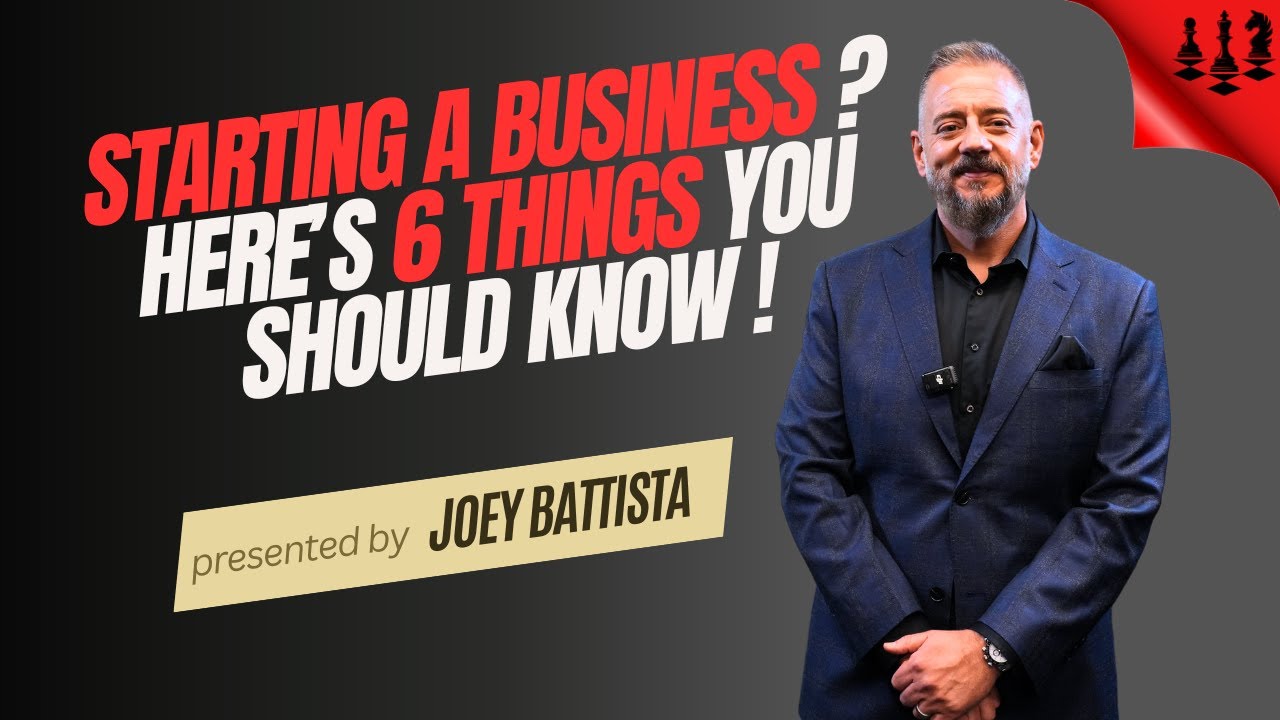
6 Steps to Start a Business Using a Proven Business Framework
If you are starting a business, or thinking about starting one, this message is for you. I get this question constantly. People ask me where to begin. They ask what business they should start. They ask how to avoid mistakes they see others make.
What I am going to share with you here is not theory. It is not something I read in a book. It is a business framework I have used for decades. I still use it today. If you work this exercise the way I explain it, it can change your life.
Everybody can be an entrepreneur. The problem is not talent. The problem is poor decisions made too early. One wrong move at the start can cost you twenty years.
Let us walk through the exact steps to start a business using a framework that actually works.
Step One: Identify the Right Industry Before Anything Else
The very first step to start a business is choosing the right industry.
This decision matters more than your logo, your name, or your website. If you get this wrong, everything becomes harder. I see people rush this step all the time.
You must ask yourself what industry you want to work in. Not just one. Write down several options. Then work through a process of elimination.
Look at industries you are interested in. Look at industries you could enjoy. Also ask if that industry supports the lifestyle you want.
Do not get overly attached to money at this stage. Money matters, but lifestyle matters too. We live in a world where you can have both. You can build wealth and still live well.
If you start in an industry that conflicts with your values or lifestyle goals, burnout is almost guaranteed. I have seen it happen to very successful people.
This is why industry selection is the foundation of any strong business framework. It sets the tone for everything that follows.
Step Two: Choose a High Net Profit Margin Business
Here is something I can guarantee you. Business will not go the way you want it to.
Every entrepreneur learns this lesson. Problems will show up. Mistakes will happen. Unexpected costs will appear.
High profit margin businesses absorb these problems. Low margin businesses do not.
When you choose a high net profit margin business, you give yourself flexibility. You give yourself room to grow. You give yourself the ability to invest in yourself.
High margins allow you to hire coaches. They allow you to hire mentors. They allow you to attend classes and get better skills.
If you operate on razor thin margins, you cannot afford development. You cannot afford mistakes. That pressure breaks people.
The demand for new skills changes faster today than ever before. You must be able to adapt. Profit margin gives you that ability.
This step is critical in the steps to start a business the smart way.
Step Three: Look for a Low Barrier to Entry
If you are an early entrepreneur, you likely do not have a lot of cash. You probably do not have equity either.
That is normal. Everyone starts there.
This is why you should look for businesses with a low barrier to entry. These are industries with minimal licensing, regulation, and upfront costs.
High barrier industries often compress margins. They require more capital and more experience. That does not make them bad businesses. It makes them harder for beginners.
I see people say they need investors before they have experience. That is one of the most frustrating things in business.
Early entrepreneurship requires effort. You have to sweat. You have to earn your skills. That process is how you grow.
The idea that you must avoid mistakes is unrealistic. Learning is part of the journey.
Low barrier businesses let you learn while moving forward. That is how real growth happens.
Step Four: Decide Who You Need to Know and What You Need to Learn
Once you identify an industry, you must ask two important questions.
Who do I need to know?
What do I need to know?
You cannot skip this step. You must get access to information. You must get into the right rooms. You must talk to people already doing the work.
Sometimes the answer is simple. You might not need to know anyone. You can start alone. You can sell a product or service directly.
Other times, you must find mentors or peers. You must attend events. You must ask questions and listen.
Write this part down. Be specific. How will you get the information you need?
If you ignore this step, you will struggle even in a good industry.
A strong business framework always includes access to knowledge.
Step Five: Be Honest About the Skills the Business Requires
Every business requires skills. Some are technical. Some are personal.
If a business requires a skill you do not want to learn, that is a warning sign. Do not force yourself into something you will resent.
I will give you an example. If a business requires welding, and you hate welding, do not choose that business.
Skills matter. Desire matters too.
Now here is the flip side.
Ask yourself what skills you already have. Look at your life honestly. Look at your experiences.
People often discount themselves. They say they have no transferable skills. That is almost never true.
I spent years speaking in front of people. I ran meetings. I led teams. Those skills transferred naturally into coaching and content creation.
I did not become comfortable on camera overnight. I already had decades of experience communicating.
You have skills too. You just need to identify them.
Sit with this question. Do not rush it. Real clarity takes time.
Step Six: Understand That Frameworks Beat Hope Every Time
Mindset matters. I believe that deeply. But mindset alone is not enough.
People fail because they lack frameworks. They rely on motivation and hope. That is not a strategy.
A framework gives you structure. It gives you repeatable decision making. It removes emotion from critical choices.
I believe every person has genius. The issue is not ability. It is direction.
This business framework is one of many I use. It helps people align their goals, skills, and lifestyle with the right business.
When you follow a framework, business becomes predictable. Not easy, but predictable.
That is how long term success is built.
Why These Steps to Start a Business Actually Work
This framework works because it respects reality.
It respects that business is hard. It respects that people make mistakes. It respects that growth takes time.
It also respects your life. Your goals matter. Your happiness matters.
Business should support your life, not consume it.
I have used these principles to build companies and help others do the same. The real reward is seeing lives change.
This is not about ego. It is about service. It is about giving people tools that actually help.
Final Thoughts on Building Smart Business
If you work through this exercise honestly, it will shift how you see opportunity.
You will stop chasing shiny objects. You will stop copying others blindly. You will start making decisions with clarity.
This is smart business. This is intentional business.
I want you to build a business that fits you. I want you to build a business that grows with you.
You can do this. I believe that fully.
Take the Next Step
If this framework resonated with you, do not stop here.
I work one on one with entrepreneurs who want structure, clarity, and real results. I also speak to teams and organizations looking to build better leaders.
You do not have to figure this out alone.
You can reach out by calling 571-576-6194 or schedule a one on one appointment with my team.
I look forward to connecting with you and helping you build the business and life you actually want.


